Guest post - The Charts of Tomorrows and Norwegian fairy tales by Chris Willrich

Tuesday, July 14, 2015

In The Chart of Tomorrows, my ongoing sword-and-sorcery characters, the poet Persimmon Gaunt and the thief Imago Bone, at last track down their lost son, to a fantastical version of Scandinavia.

In a way I’m surprised it took this long to work Scandinavia into the series. My mom’s side of the family has a strong connection to Norway, on both sides of her family tree. In fact her father, who died before I was born, was a first-generation immigrant. Bits and pieces of Norwegian-American culture were always part of the background when I was growing up — lefse at Christmas, pewter Vikings, dragon-ships in artwork, and books of troll stories. It seemed fitting to eventually bring the rogues to a fantasy version of Scandinavia.

Art by Richard Benning

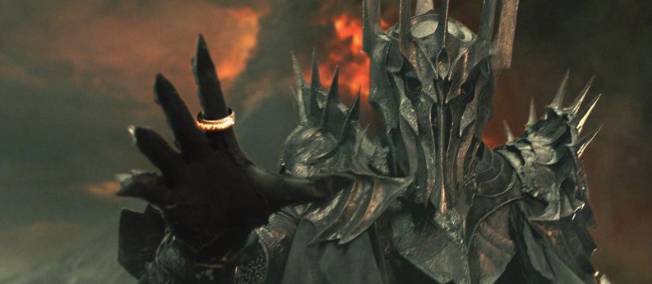
There was a challenge here though. Scandinavia has long been a big influence on fantasy fiction. Not only have there been many fantasy versions of Vikings, but the modern genre owes a huge debt to J.R.R. Tolkien’s interest in Norse stories. How to give it something new?

It seemed to me that while Scandinavian mythology and the adventures of the Vikings are pretty familiar to readers, the folk tales I got hints of while growing up might be less widely known (maybe with the exception of “The Billy Goats Gruff”). So one of the threads I drew upon were those troll-tales I read as a kid.

In The Chart of Tomorrows, Gaunt and Bone meet Inga Peersdatter and Malin Jorgensdatter, inspired by the 19th Century Norwegian folklorists Peter Christen Asbjørnsen and Jørgen Moe. (I pay tribute to these Norwegians with the last names of the characters). Like the Brothers Grimm, Asbjørnsen and Moe gathered stories told in the countryside, in many cases saving tales that might have been lost. My version of the two folklorists makes them larger than life (and female). Inga is a troll-child left with a human family as a changeling. Her best friend Malin, a young woman with an unusual mind, gets called a “changeling” by villagers simply because they find her strange. Malin and Inga, two outsiders thrown together, become a sort of Holmes and Watson of fairy tales — if Holmes were a brilliant folklorist and Watson capable of felling trees with his bare hands.

As a kid I often encountered Asbjørnsen and Moe’s work without knowing it. Tales of trolls with various numbers of heads, or of cow-tailed hulder women ready to lure young men to their dooms, or of poor farm boys who tangle with kings or supernatural creatures and win, often had their sources in their groundbreaking collections. These stories painted my picture of Norway, a country I’d never seen for real (and still haven’t, alas) but which seemed to me something like my Pacific Northwest surroundings magnified by a factor of ten and embroidered with monsters and other spooky characters in the shadows, with the odd Viking brooding here or there. Although I’ve tried to put a sheen of history on it all, it’s really that imaginary childhood dream-Scandinavia that Gaunt and Bone travel to.

And so their son, lost in the Bladed Isles, gets the nickname “Ash-lad,” the literal name of a hero — also known as “Askeladden” among other names — who keeps popping up in Norwegian folktales. The Ash-lad’s a sort of action-hero Cinderella, a plucky boy from poor circumstances who has the courage and insight to take on the most dangerous challenges and win. And so, armed with this nickname, Gaunt and Bone’s son encounters otherworldly hulder-folk (called uldra in my version) and maniacal trolls, on the way to finding out who he is and what side (if any) he’s on.

The trolls in particular were great fun to imagine. The ones in the stories might be smaller than people, but just as easily could be the size of hills, with trees growing out of them. They could have multiple heads, and might live under bridges or behind waterfalls. They’re a strange combination of awesome strength and dreamlike mutability. In the story “The Trolls in Hedale Wood,” two brothers encounter three trolls with a shared eye, and the elder boy gets the better of the trolls and looks through the eye, seeing darkness as though it were day. In another story, “The Giant Who Had No Heart,” an immense being, surely kin to the trolls, is unbeatable because he has hidden his heart away from his body. Naturally it’s the Ash-lad who overcomes him. 

The Ash-lad of the old stories is surely a cousin of all heroic fantasy characters, who likewise keep taking on foes seemingly too big for them. And the landscape he moves through is moody and mysterious in a way that rivals Lankhmar or the Hyborian Age, a place to get lost in.

“And as a literary artist this is his [Asbjørnsen’s] highest praise, that he has contrived to lay the peculiarities of Norwegian landscape before his readers with a subtlety of touch such as no other poet or proseman has achieved — not by description so much as by a series of those sympathetic and brilliant touches which make us forget the author, and fancy we are walking in the body through the country of his affection.”

— Edmund W. Gosse, introduction to Peter Christen Asbjørnsen’s Round the Yule Log, translated by H.L. Brackstad, 1881 (quoted in Scandinavian Folk and Fairy Tales, edited by Claire Boos, New York, Avenel Books, 1984.)

Any fantasy reader who’s loved being swept off to another world will understand the sentiment. Whether or not you ever read The Chart of Tomorrows, I hope you’ll track down some of those old stories yourself, and get away from it all, east of the sun, west of the moon.

***


Written by Chris Willrich

Chris Willrich (Mountain View, CA) is a science fiction and fantasy writer best known for his sword-and-sorcery tales of Persimmon Gaunt and Imago Bone. Until recently he was a children’s librarian for the Santa Clara County Library System, in the San Francisco Bay Area. His work has appeared in Asimov’s, Beneath Ceaseless Skies, Black Gate, Fantasy and Science Fiction, Flashing Swords, The Mythic Circle, and Strange Horizons.

The Chart of Tomorrows
Gaunt and Bone book 3
Chris Willrich
Released on July 7th 2015
The poet Persimmon Gaunt and the thief Imago Bone had sought only to retire from adventuring and start a family, but they never reckoned on their baby becoming the chosen vessel of the mystical energies of a distant Eastern land. With their son Innocence hunted by various factions hoping to use him as a tool, they kept him safe at the cost of trapping him in a pocket dimension of accelerated time.  
Now free, the thirteen-year-old Innocence has rejected his parents and his "destiny" and has made dangerous friends in a barbaric Western land of dragon-prowed ships and rugged fjords. Desperately, Gaunt and Bone seek to track him down, along with their companion Snow Pine and her daughter A-Girl-Is-A-Joy, who was once trapped with Innocence too.  
But as the nomadic Karvaks and their war-balloons strike west, and a troll-king spins his webs, and Joy is herself chosen by the spirit of the very land Innocence has fled to, Gaunt and Bone find themselves at the heart of a vast struggle -- and their own son is emerging from that conflict as a force of evil. To save him and everything they know, they turn to a dangerous magical book, The Chart of Tomorrows, that reveals pathways through time. Upon the treacherous seas of history, Gaunt and Bone must face the darkness in each other’s pasts, in order to rescue their future.
***

Guest post - Difficult topics to write about by Peter Orullian

Wednesday, June 3, 2015

I get the irony of writing an article about difficult things to write about. I mean, I’m gearing up to write about things I think are hard to deal with in fiction. But on at least one level, it might also be important to call attention to such things. Anyway, I intend to try.

Let me start with: Death

In fantasy fiction death is common. It often happens at scale, too, with armies and battles and sweeping wars. But even when it’s not a numbers game, there’s usually plenty of death to go around.

The thing is, too often I’m not sure the deaths are made to matter. I’m not suggesting we mourn the death of an unrepentant “bad guy.” And in a scene with hundreds of deaths, there’s not time enough to go into each one individually. But typically, we’re following one—or maybe a few—characters. Whether it’s one of them who dies, or perhaps them doing the killing, reactions to death need to be on the page.

Artwork by Adam Kuczek

It’s not simply that death is cheapened if no one gives a damn. It’s also that it’s just unrealistic if no one does. Most people have others who care about them. This is absolutely true for military folk, starting with the men and women with whom they serve. 

So, if someone falls, there will be grief. And the point I’m making is that death deserves that much. I’m not making an argument that not doing so desensitizes us. Maybe it does, there’d need to be real research to prove that out. No, my argument is simpler. It’s that however natural or part of life death might be, it’s difficult. We grieve. Maybe you’re writing a stoic character who holds in his or her emotions. Maybe. But the world isn’t uniformly stoic. 

When a character falls or watches a friend or loved one fall—whether in battle, or from old age, or whatever—the emotion it evinces from those who care about the one who’s fallen should be clear. And for fiction writers, it’s a powerful opportunity to build character, sharpen motivations, and deepen the narrative. I tried to do this at the very beginning of TRIAL OF INTENTIONS, having a character pause to mark the moment of the passing of some few who’ve perished. With any luck, it’s added some resonance both to the character, and to the story more broadly.

And beyond all this, I think—for folks who are more intimately acquainted with death (perhaps because they’ve lost loved ones, themselves)—writing death has added layers. Or should. Again, not every death. Clearly, in a war there are countless who fall, and we can’t kneel beside each one of them. But wherever we’ve focused our story, I’m suggesting that writing death honestly is a taut, emotional experience. It leaves one drained. That’s the investment I think is right on the part of the writer. And it goes a long way to helping that specific death have weight and meaning, which then enriches the tale.

Next, I want to talk about: The mistreatment of children
I’ve often wondered if writing about the mistreatment of children is harder for writers who are parents than those who are not. I don’t have any data to argue the idea one way or the other. But for my part, the very moment my first child was born, something in me changed. For the better, I think. Less selfish. More dedicated. 

And the idea of a child in peril is bound to evince powerful reactions in me, even when I’m writing it myself. This is why I make every effort to be thoughtful about my approach to this topic. I dislike the notion of playing loose with the mistreatment of children. Yes, if it serves the story, it has a place. But if it’s a device inserted without care, simply to garner a shock, I get turned off.

Artwork by Casey Weeks

In my series—The Vault of Heaven—I have a character who cares for castoff children, orphans, and foundlings. And he pays visits to families where he’s able to place a few, from time to time. In one instance, he finds a man who’s abusing a child he’s entrusted to this man’s safe-keeping. It doesn’t go well for the abuser, as you might imagine.

My point is not that writers shouldn’t write about child abuse or other kinds of mistreatment of the young. In many stories, it’s salient. Even necessary. But my feeling is that it needs to be germane to the story. And when it’s written, it needs to be done with care. Not that it can’t be stark, or brutal, or both. In fact, it’s not a thing to be gilded. But by the same token, I, personally, want to see it done thoughtfully. This might take many forms. 

If you’re writing from the POV of the child, take me inside their pain. Talk to me about how they feel, how they might intend to escape, or why they stay. It reminds me of the film Radio Flyer. Good flick, if you have the time.

And I caution against trying to make a child abuser sympathetic, which, in turn, reminds me of the film The Woodsman with Kevin Bacon. I love Kevin, but he tried to play a pedophile sympathetically. He failed. The story set him up to fail. 

Sure, share with me the reason why an abuser is abusive. People usually do things for reasons. But reasons are not justifications. Big difference. I know it’s fashionable to write about moral ambiguity. But where mistreatment of children is concerned, ambiguity is a bad choice.

Show some care, is what I’m trying to say. It’s a topic that warrants it.

Last, I’d like to talk a bit about: Suicide
Want to know the truth . . . I waited to write this last. I even wrote the closing that comes at the end before coming to this. Why? It’s a bit raw for me. I’ll try to explain.

See, in TRIAL OF INTENTIONS I take up the topic of suicide. It’s not what the book is about, but a few of my characters are intimately acquainted with it. They’ve had people make this choice. And they’re struggling through the aftermath. Their motivations become stronger, deeper, as a result. But it’s not easy. 

Then, as I was writing this book, early on, I had a friend make this choice here in the real world. I thought I’d worked through all the emotions. But when I went back to the book for edits, it was startling to see how it had woven itself into the book.

TRIAL OF INTENTIONS was always going to deal with suicide. There are harsh conditions for many of my characters. And some lose their battle to the weight of it all. But the real world imposed itself. And I did write it as honestly as I could. I think it resonates fairly well.

But to circle back to the point, this is a sensitive topic. It’s more common than is reported. Military veterans. Kids from abusive homes. Kids who are the victim of bullying. 

I rage at preventable circumstances that contribute to someone making such a choice. And always, I just wish those who are suffering could find the help they need.

In fiction, whether you’re writing a character who is battling the kind of depression that suggests they kill themselves, or those left behind when someone close to them takes their own life, please give it some thought. I’m not suggesting page after page of it. In some instances, sparingly treated is appropriate. But even then, the few words you use to communicate about suicide will say a lot. About the characters. About you.

Like the other topics I’ve covered, this is one that deserves a kind of gentleness. Not to be mistaken with gentle writing or soft words. Starkness may be precisely what is called for. But when describing the act or the consequences for those left behind, you’re writing about hopelessness and helplessness. These are powerful emotions. Treated well, they can lend a lot of power to the narrative. Deepen motivation for other characters. Give it all a more human feeling that increases our sympathy and investment as readers. 

It’s not a trick or device. Or, I should say, it shouldn’t be treated as such. Not from where I’m sitting, anyway. Others may disagree with me. That’s fine. Glad to have the debate. But as I’ve said of other topics that I think deserve careful attention, when suicide is flippantly or carelessly or thoughtlessly written, it’s easy to tell. And it’s a turn off.

Where does that leave us?
To close, by “difficult to write about,” I don’t mean the words come slowly. Nor do I mean that these topics are off limits. Or even that the degree to which you show these things has a limit. Those are writer choices and proficiencies. 

What I mean is that I’m of the opinion that they’re challenging topics to write about if you intend to do them well. They’re potent, to be sure. They can fill you story with a depth they might not otherwise have. But to achieve that depth, you have to plumb. Trust me, it’s easy to spot the difference between writers who do and writers who don’t go down to the bottom of the pain.

None of which is to say I—or any writer, for that matter—is perfect at any of this. Sometimes you nail it. Sometimes you don’t. But in all instances, it’s better to make the effort.

*****

Written by Peter Orullian:

Peter has worked at Xbox for over a decade, which is good, because he’s a gamer. He’s toured internationally with various bands and been a featured vocalist at major rock and metal festivals, which is good, because he’s a musician. He’s also learned to hold his tongue, because he’s a contrarian. Peter has published several short stories, which he thinks are good. The Unremembered and Trial of Intentions are his first novels, which he hopes you will think are good. He lives in Seattle, where it rains all the damn time. He has nothing to say about that. Visit Peter at www.orullian.com, or follow him at @peterorullian.


Trial of Intentions blurb:
The heart of grief lies somewhere between one man’s expectation and another’s intent. 
Enemies come. But one enemy believes the gods were wrong about his exiled people. And he’s impatient. 
Nations arm. But one man finds a realm paying for its gearworks with an awful currency. And he’s angry. 
Politicians lie. But one leader lies because he would end the days of slums and porridge. And he’s ambitious. 
Songs restore. But one woman will train to make her rough song a weapon. And she’s in pain. 
Magi influence. But one sage follows not his order’s creed; he follows his heart. And his heart is bitter. 
And one young man remembers. He remembers friends who despaired in a place left barren by war. Friends who did self-slaughter. But he also remembers years in a society of science. A gentler place. So he leaves the rest, daring to think he can lead not in battle, but by finding a way to prevent self-slaughter, prevent war. 
The heart of grief . . . is a trial of intentions.

Guest post - Grieftongue by Jeff Salyards

Monday, May 26, 2014

With the release of Veil of the Deserters, I thought to ask Jeff Salyards if he would be interested in a guest post.  I offered several topics and interestingly enough, he included several of them.  The subject I was most eager to read about was the inclusion of grief in his work.

Here's the story behind the man and a part of his writing. Thanks Jeff for sharing!

***


Grieftongue

Memorial Day twenty-eight years ago was unquestionably the most devastating day of my life.

My mother and father had been divorced for years, and my father usually picked me up on Wednesday night for dinner and then had me on the weekends. Right before Memorial Day weekend, he called and told me has wasn’t feeling great but he still hoped to pick me up on the holiday, since it was probably just a cold.

While my father didn’t exactly partake in what most people call “exercise,” he was still active, working on his old jeep or boat, fixing one thing or another in the house, doing photography shoots, wrangling me. But he also ate what his stomach told him to, and didn’t exactly have the healthiest tastes—he was the kind of guy who liked Velveeta and Spam sandwiches on Wonder Bread. What? That isn’t a type, that was just him? Well. There you go. He also drank fairly regularly, and smoked. Not a great combination.

Sill, he was generally (and surprisingly) healthy as a horse, and wouldn’t go to the doctor unless a bone was sticking out of his body or he was bleeding out his ears. And maybe not even then. Stubborn as all get out, and that surely is a type, as I know all too well, as I fall in that camp, and karmically enough, so do my daughters.

And more than anything else, when my dad told me he was going to do something, he did it. So I fully expected he would rebound and get better and pick me up. I didn’t hear from him that morning, and while he was sometimes late, and this was still the era before cell phones (yes, that WAS an era), so I shouldn’t have been worried, I was. I couldn’t explain it, but I had the awful feeling that something was wrong.

I called his house, hoping to get my stepmom, and she didn’t pick up.  And for some reason, that’s when I absolutely knew. I told myself it was crazy, he wasn’t that late, everything was probably fine, but somehow I just knew for a certainty that I was lying to myself and that the worst had happened.

When I called my grandmother’s house to see if she knew anything, it was confirmed immediately, as she picked up and couldn’t put two sentences together. I don’t even remember who took the phone and told me the news, my stepsister or stepmom, only that someone was crying when they said that my father had suffered a massive heart attack. He was dead.

The rest is a blur. I dropped the phone, walked aimlessly as I started to cry, and then as the enormity of the news hit, I grabbed my nephew’s baseball bat, ran out of the house, and started bashing nearby trees until my hands were slick with blood as my skin tore open and I collapsed for a time in the bark and broken branches.

I’d lost people before. My grandfather and aunt both died from cancer. But I was young and didn’t comprehend much besides the way those deaths impacted others and made them incredibly sad.

And I would lose people after. My brother died from severe complications due to a rampant case of diabetes when I was 18, my grandmothers and uncle died as the years rolled on, and most recently, my mother a handful of years ago.

But as terrible as they each were in their own way, losing my father at 14 had the most impact on me. It wrecked me for a time. Indiana Jones was the only one who gave him a run for his money in the hero department (I bought the fedora, leather jacket, and a 14 foot bullwhip even), but my father stood above everyone else. I was old enough to know he wasn’t infallible, but he was insanely smart, terribly funny, gentle and patient and strong. My father was and always would be my hero. And losing him right on the cusp of 8th grade graduation, at a time in my life when I probably needed him the most, well, words can’t adequately describe the devastation or the depth of loss.

What does any of this have to do with fiction? Well, a lot right now, as it happens. At least my fiction.


I’m going to try to avoid spoilers, as my immediate reaction to people spilling the beans is the desire to punch them in the nose. But just to be safe, if you haven’t read Scourge of the Betrayer or Veil of the Deserters, you might want to stop reading as I slyly try to allude to aspects of either books without, you know, actually coming right out and spoiling anything. I like my nose.

When I first started Bloodsounder’s Arc, I knew there was going to be violence. Battles, skirmishes, duels, sieges, pitched battles.—they would all appear on the page at some point. And  I was committed to presenting those things as realistically as possible. I know not all readers even like battles—some of them fall asleep the first time a sword is drawn, or consider fighting something to be endured until the next great character moment or plot twist arrives. And there are some readers that love action in their novels but prefer it to be the stuff of legend or high fantasy, with heroic champions wading into the mix, dispatching foes by the hundreds, or wizards going mano y mano while riding griffins of the wind itself, hurling eldritch fury at one another, tearing the fabric of the universe asunder in the process.

I get it: realistic battles are absolutely not everyone’s cup of grog. But that was the kind of story I wanted to tell, doing my best to put the readers right there in the middle of the chaos with Arki, feeling arrows whizzing past or thunking into a post right near his head, watching armor fend off blows the way it was intended, but also feeling and seeing the terrible results when it failed to. I wanted it to be as visceral as possible. And even in Veil, where memory magic features prominently, it’s not the stuff of fireballs and lightning storms of even Otto’s Irresistible Dance, but more subdued, even when it is sometimes deadly. My objective was to paint the battles as they actually occur with armored men and women trying desperately to kill each other, even when magic is in the mix.

I didn’t want to revel in the violence or gratuitously heap more terrible details on more terrible details like a pile of severed limbs outside a surgeon’s tent (see, that was unnecessary!). At no point did I try to glamorize it, or escalate it with the intent of turning stomachs.  That said, I wanted every bit of combat to feel weighty, real, significant.  

But I also knew that if I was going to write about these hardened soldiers and the harsh realities of what it’s like to stab or bludgeon each other to death, I couldn’t shy away from the aftermath of that either. There are wounds, casualties, and deaths of course, and a complete shortage of healing potions or potent clerics wandering the battlefield rescuing anyone. No one is completely safe. But just as important, I wanted to show the emotional wounds. It would feel dishonest to portray combat as realistically as I can and then fail to explore the personal impact this has, both on those who deal in it, and those who lose someone.

Since the narrative funnels though Arki, he of course wrestles with everything he sees, completely out of his depth, not trained for warfare, especially the kind waged by the Syldoon soldiers, who are the ultimate pragmatists. His sensibilities frequently clash with the company he keeps (hopefully in engaging and compelling ways), but more than that, I wanted him to both experience and witness grief.

To paraphrase the good captain, there are a variety of griefs—loss of love, trust, honor, home. It is always about loss, dealing with absence. The most terrible being the loss of life, as it is irrevocable.

One old fiction workshop sawhorse is “write what you know.” But taken literally, that would mean every college freshmen short story would be about hazing, beer bongs, condoms breaking, tests flunked, procrastination, and homesickness. There are plenty of ways to know something—obviously first-hand experience is a primary source, but you can also witness things, research things, and simply imagine your way into situations based on good intuition or instincts. So I don’t presume to be any more equipped to write about grief than any other writer simply because I’ve experienced some. But it has made its way into my writing, and no place more keenly than Bloodsounder’s Arc.

In Scourge, one character loses another, and I tried to capture this as truthfully as possible. But the aperture on everything widens a bit in Veil—worldbuilding, magic, intrigue, characters—and this holds true for grief as well. Much like the portrayal of violence itself, I didn’t want to wallow in grief or let it dominate the narrative or anything. But I tried to capture it as honestly as I could, as several characters have lost people close to them, recently and deep in the past. As Arki gains the trust of the members of the company, becomes more embedded, he is privy to more of their stories, the things that shaped them, damaged them, maybe even strengthened them.

While I never saw a relative murdered in front of me, and I’ve never lost a friend in the middle of combat, there are different ways of “knowing” as mentioned, and I did the best I could to make these moments feel as authentic as possible. But I absolutely know what it means to put loved ones in the ground or scatter their ashes, and I drew on that as much as I could, trying to render it realistically as these characters revealed and shared their own pain in various ways.  

And for the first time in my life, I used fiction to directly deal with losing my father, to infuse that loss into something I created. Twenty-eight years is a long time—the absence is no longer sharp and crippling, but I still vividly remember it, and I wanted to use that in my portrayal of characters who also deal with tremendous grief.

***

Jeff Salyards is the author of the two books, so far, in the Bloodsounder's Arc, Scourge of the Betrayer and Veil of the Deserters.  He has been reading for as long as he can remember and lives with his family in Chicago.  He was also my favorite debut author of 2012.

My review of Scourge of the Betrayer. My review of Veil of the Deserters should be up soon.

Guest post - Craftsmanship in Fantasy by Miles Cameron

Thursday, March 13, 2014


The Fell Sword, released on March 11th, is the second book in the Traitor Son Cycle by author Miles Cameron, who adopted Canada.  Miles is his pseudonym for his Fantasy writing since he's already know in the Historical and Military Fantasy ground as Christian Cameron.  The author is also a reenactor which you can find more about on his webpage.

You can also read my review of the first book of the series, The Red Knight, here.

For the release of the Fell Sword, Miles wrote several guest posts in his blog tour. Here's an interesting one on craftsmanship in Fantasy.

Enjoy!

***

Craftsmanship in Fantasy
by Mile Cameron

I love fine craftsmanship, and my books—especially Red Knight and  Fell Sword owe both depth and inspiration to men and women who make beautiful things. 

Some of that craftsmanship comes from the past—a look inside a seventeenth century wheelock pistol will inspire almost anyone, as will the enameled jewelry of the early fifteenth century—but most of my favorite items come from the present day.  We are lucky—we are, by historical standards, incredibly wealthy and we have access to virtually everything that has come before us, so modern craftspeople have an incredible repertoire of techniques on which to draw. 

I have met JT Palikko, who makes blades that seem magical to me and works on an island off Helsinki in Finalnd; I have a number of pieces by Leo Todeschini, whose work is magnificent and whose balestrino crossbow looks like something that should only exist in ‘Assassin’s Creed’. Eric Schatzel is an American ‘blacksmith’ who makes blades and axes that look and feel like originals.  Peter Fuller of Canada and Jiri Klepac of the Czech Republic and Craig Sitch of Australia are all brilliant armourers, as good as the men who made the harnesses we see in museums.  My friends Josh Brevik and Ward Oles can do quillwork and metalwork to rival the 18th century originals; my friend Aurora Simmons makes modern jewelry and medieval jewelry and buckles and ancient Greek pins of astounding complexity.  My friend Justin Clement can sew an eighteenth century buttonhole (not to mention he whole garment on which it goes!) and my friend Tasha Kelly has reproduced the whole of Charles of Blois’ insanely complex two layer quilted pourpoint. 

I know gunsmiths and blacksmiths—Jymm Hoffman can make you an entire train of artillery, given time and money—whitesmiths, book binders, butchers and cooks and lace makers and people who work tapestries and make moccasins.  My father taught me this love, and he is, as far as I know, the last man in the world who can make a horsehair fishing line.  Erv Tschanz taught me leatherwork and is still a master at it—and hornwork, the ‘plastic’ of the pre-modern world.  Karl Robinson is another—his leatherwork looks as if it was made by elves and not a man. 

All these people—all these crafts—inspire me to write about them.  Material culture is a wonderful story by itself!

''Are the Worms Really Big?'' by Robert V.S. Redick

Tuesday, February 5, 2013

Robert V.S. Redick, author of The Chathrand Voyage Quartet contacted me recently with an idea for a guest post/essay on the art and challenge of making the fantastic believable.  I found the idea more than interesting and today I share it with you.

***


Are the Worms Really Big?
Creating a Texture of Belief in the Fantastic
by Robert V.S. Redick

Why yes; they are big, rather. But then, even people who haven’t read Dune know that much. Here’s a better question: how on earth did Frank Herbert ever make us believe in his giant sandworms, these most improbable of monsters, to begin with?


A confession, first: on beginning this essay, I found to my shock that the worm/size question never directly appears in Dune. The line I half-recalled is, “Are the guild ships really big?” (Yes, they are). It’s a question young Paul Atriedes asks in the opening chapters of the book. There are others: “Why don’t they have weather control?”, “Have you ever seen the Fremen?”, “How did you trick my mother into leaving me alone with you?”, “Did my father send you up to test me?”, “What’s in the box?”, “What’s a gom jabbar?”, “Why are we walking into this?”

And on and on. The ratio of questions to total sentences in the first ten percent of Dune is roughly on par with Green Eggs and Ham. And not without reason: Paul is only crudely informed about the fascinating hell into which his family is about to plunge. As such, he’s a great vehicle for the reader’s own foray into Arrakis. He wants to know. His very survival depends on knowing. And he has a gift that brings him glimpses of the world he will inherit: glimpses  precisely engineered to spur our own interest along.

But about the most famous single feature of the novel, his question is strangely offhand:
"And the worms?" Paul asked. 
"What?" 
"I'd like to study more about the sandworms." 
"Ah-h-h-h, to be sure. I've a filmbook on a small specimen, only one hundred and ten meters long  and twenty-two meters in diameter. It was taken in the northern latitudes. Worms of more than four hundred meters in length have been recorded by reliable witnesses, and there's reason to believe even larger ones exist."
It’s a curious scene--because for once, Paul doesn’t show much curiosity. Indeed he pays little attention to his interlocutor, Dr Yueh (Herbert has more than one reason for that), and Yueh, for his part, is the most pedantic of the six elders who whirl about our hero in the course of some forty pages.

What’s going on? Is Paul a clod? Why isn’t he leaping up and down, all but out of his mind at the thought of going to a world where carnivores four hundred meters long rule over a sea of sand?

A major reason is because it wouldn’t help us believe. In fact, any “Wow, Geeze, OMFG” behavior would likely do the opposite, and fix our attention on the improbability of such an animal. And that would be narrative poison. We need, rather, any help the author can give us to suspend our disbelief. And Herbert delivers, by quietly transmitting the cold fact (four hundred meters) and moving us immediately on.

The same tactic occurs again and again: brief, glancing mention of the monsters, a determined withholding:
They say you can’t drill in the desert--storms and sandtides destroy equipment faster than it can be installed, if the worms don’t get you first.


So many new things to learn about. The spice. And the sandworms. 
“Ah-h, the worms,” the Duke said. “I must see one sometime.”
As it happens, the Duke sees one in a matter of hours after expressing that wish--and so, for the first time does Paul:
The wormsign had broken off…and now there appeared to be turbulence in the sand around the factory…. Flecks of dust shadowed the sand around the crawler. The big machine began to tip down and to the right. A gigantic sand whirlpool began forming there to the right of the crawler. Sand and dust now filled the air for hundreds of meters around. 
Then he saw it! 
A wide hole emerged from the sand. Sunlight flashed from glistening white spokes within it. The hole’s diameter was at least twice the length of the crawler, Paul estimated. He watched as the machine slid into the opening in a billow of dust and sand. The hole pulled back.
I’m not here to comment on Herbert’s prose style, or his fondness for exclamation points. But notice than even now, the veil on the beast is but partly lifted. The worm’s just swallowed a machine the size of a castle: we see what it can do, but we barely see it.

And how much better this way. Herbert not only sneaks up on us with his great, grotesque monster, but leaves much of the canvas blank, for our mind’s eye to fill. The terrors with which we fill those gaps nearly always enhance the experience. As readers, we are participants dreamers, guided rather than controlled by the author’s spell.

But back to selling the impossible. Here’s good old Gandalf, at ease in the Shire on a quiet morning, setting the stage for the looming apocalypse that will shape the Trilogy:
But last night I told you of Sauron the Great, the Dark Lord.

Did you, now? And where were we? Why in God’s name wasn’t that included in the text, alongside Bilbo’s birthday antics?

Because once again, we’re in the realm of the ultra-fantastic, the extreme supernatural. And with this dexterous maneuver, Tolkien helps us believe by suggesting that we already know. Gandalf continues:
The rumors you have heard are true: he has indeed arisen again and left his hold in Mirkwood...
What rumors? Oh yes, um, those rumors. The ones “we’ve heard,” which are nowhere in the text. Of course.
…and returned to his ancient fastness in the Dark Tower of Mordor. That name even you hobbits have heard of, like a shadow on the border of old stories.
You see? (Tolkien tells us). You know about Mordor already: it’s the nightmare place you’ve always been afraid of. The very question of its reality is sidestepped: we are already afraid that The Worst Place Imaginable is about reach out and lay its withering hand on Hobbiton.

Remember Orwell? “You know what’s in Room 101, Winston. Everyone knows what’s in Room 101.”

Herbert aids us with the utmost generosity. By the time a sandworm looms in plain sight over Paul and Jessica (blind, thrashing, drowning them in the reek of spice), we have long since subscribed to their reality.

In The Chathrand Voyage Quartet, the epic fantasy series that concludes February 5 with The Night of the Swarm, I try to practice what I’ve just been preaching. My world of Alifros fairly overflows with the strange—miniature warriors in the holds of ships, demi-spirits in the clouds, giant evangelical rats beneath a nation’s capital. But I rarely just hurl these grotesques into a scene. Rumor precedes them, and sounds, and other traces of their reality. Above all the effect of their reality on everyday people precedes them.

The horrid rats, for example, are mutation of woken animals: relatively unassuming creatures afflicted by acquired intelligence. By the time the rat plague erupts, we’ve had a gradual, 500-page induction into the reality of woken animals. We know them. We’re ready to believe in their hideous cousins. Even then, we hear them long before they take the stage. When the fatal moment comes, they attack in total darkness, and the old man trapped with them underground must glean their nature from other clues:
The wriggling stopped, and he heard a creature scrabbling from the pit. His hand groped for the axe-shaped stone. But where had he left it? By the kiln, Rin spare him, he’d dropped his weapon by the kiln!  
“Penny for a colonel’s widow?” 
The creature loped into the room. From the sound of its breath Isiq pictured an animal roughly the size of a sheepdog. Every few yards it would stop talking and take a sharp, deliberate sniff. Isiq raised the metal tray and held his breath. 
From the pit came a sudden crescendo of digging, and a muted sound, as of many voices shouting behind an earthen wall. Isiq heard the creature paw at the locked door of the chamber.  
“Penny for a colonel’s—” 
The creature broke off, snuffling again. Then it gave an ear-splitting caterwaul and lunged straight at him.
When we write of the overly familiar (taxes, teachers, office politics, a surly spouse), our job is often to make them less familiar: to find the colors and the meaning that’s been lost to overexposure. When we write of the fantastic, our job is to help it become irresistibly real. Naturalistic, photo-realistic description is one path to doing so, but it is not a safe or sufficient path. Indeed it often backfires, precisely because the reader has not been aided in her desire to believe in the spectacle.

Readers need so much more than sharp images. We need to be seduced into accepting them, we need help to sink, unsuspecting, into their world. Call it a texture of belief, if you like. It’s what the committed fantasist struggles to create on every page.


Robert V.S. Redick’s naval-epic fantasy series The Chathrand Voyage begins with The Red Wolf Conspiracy and concludes February 5 with The Night of the Swarm. A former international development worker, he lives in Western Massachusetts. 

Robert V.S. Redick page


a Fantasy Reader All rights reserved © Blog Milk - Powered by Blogger